
Short answer: A BDR protects your data and gets your business back up and running when something goes wrong.
Long answer: Backup and Disaster Recovery (BDR) combines secure data backups with a clear, tested plan for restoring systems after data loss, cyberattacks, outages, or natural disasters. It’s the difference between a temporary disruption and a full-blown business crisis.
For businesses across Northern California, including municipalities, special districts, and growing organizations, BDR isn’t a “nice to have.” It’s a core part of staying operational, compliant, and resilient.
“…Protecting your data with backups isn’t just a technical formality. Given the virtually unavoidable risks of ransomware, malicious or accidental deletions, and countless other threats—it’s absolutely crucial for the health of your business.” –Carl D’Halluin, CTO at Datadobi.

What Is Backup and Disaster Recovery (BDR)?
Backup is the process of copying your data and storing it safely, often in multiple locations.
Disaster recovery is the plan that determines how quickly and how completely your data can be restored after an incident.
Together, BDR ensures when files are deleted, systems fail, ransomware hits, or disasters disrupt operations, your business can recover without starting from scratch.
Why BDR Matters More Than Ever
Data loss is no longer rare, and recovery is rarely simple. And unless you’re off the grid completely, your company likely has a lot invested in your digital presence, from day-to-day operations to data storage.
Fact #1: Data Loss Is Extremely Common
According to industry research, approximately 64% of organizations experience at least one significant data loss incident each year. Human error, hardware failure, and cyberattacks remain the leading causes.
Even worse? Companies without a tested recovery plan face significantly higher downtime costs than those with documented BDR strategies.
Fact #2: Full Recovery Isn’t Guaranteed
After ransomware attacks, only about 8% of organizations recover all of their data. Many recover partially. Some don’t recover at all.
That means assuming “we’ll just restore everything” is a risky bet—especially without a solid BDR.
Why BDR Is a Business Decision, Not Just an IT One
Some research has shown that up to 93% of companies that experienced a data disaster filed for bankruptcy within one year of the incident. Yikes!
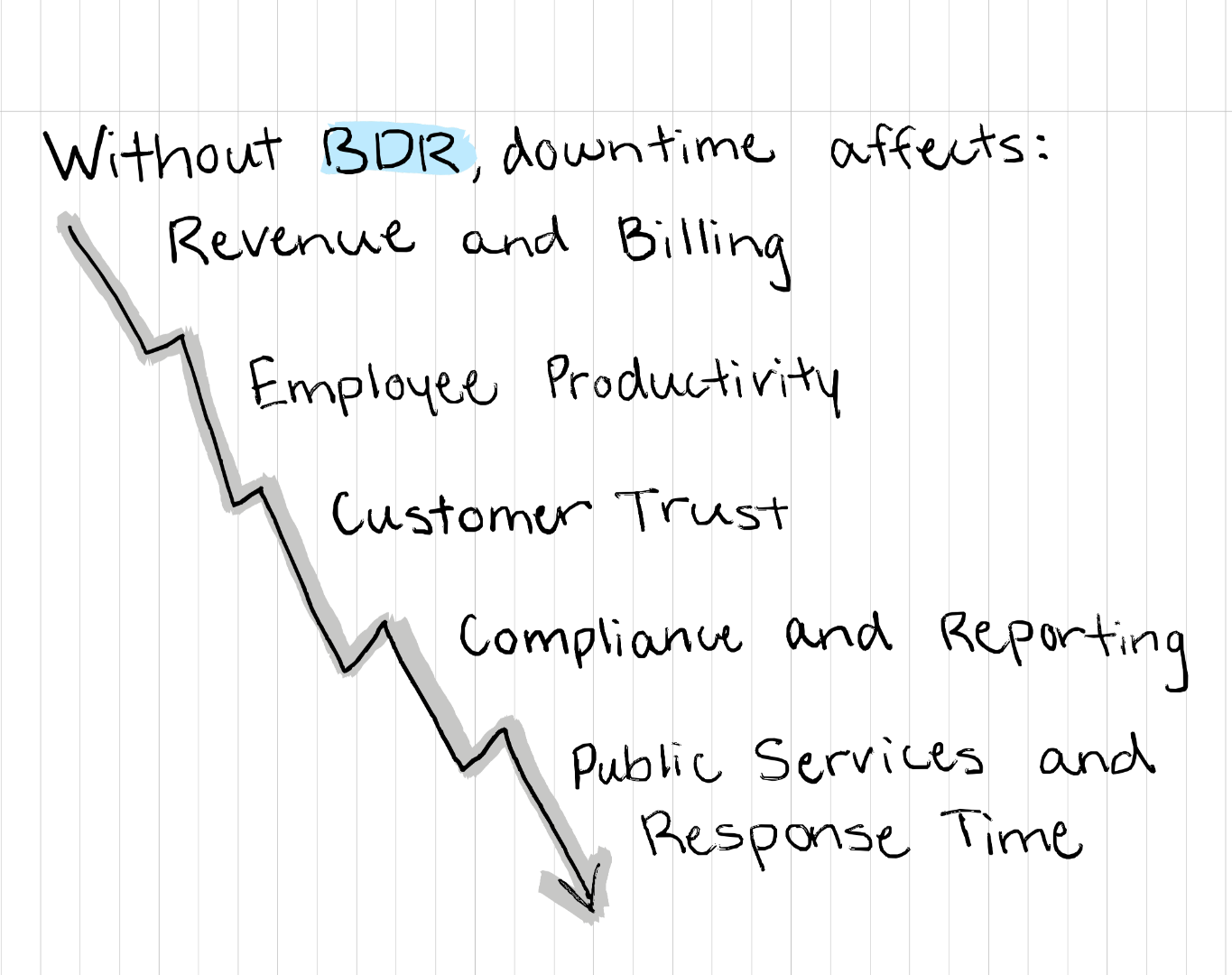
That’s because, without BDR, downtime affects:
- Revenue and billing
- Employee productivity
- Customer trust
- Compliance and reporting
- Public services and response times (for municipalities and districts)
But with BDR, technology becomes what it should be: invisible, reliable, and supportive of real work.
What Causes Business Data Loss?
Most data loss incidents fall into a few predictable categories:
- Human error (accidental deletion, overwritten files, misconfiguration)
- Hardware or system failure
- Ransomware and cyberattacks
- Cloud misconfiguration or sync issues
- Natural disasters and power outages (something we know all too well here in Northern California)
A strong BDR plan assumes something will go wrong—and prepares for it in advance.
How a BDR Plan Works in Practice
A well-designed BDR strategy typically includes:
Regular, Automated Backups
Backups run on a schedule without relying on someone to remember.
Defined Recovery Objectives
Establish how quickly, when, and where systems must be restored.
Secure, Off-Site or Cloud Storage
Including immutable backups (read-only copies of your data that stay exactly as they were when created), which can’t be altered by ransomware.
Routine Testing
Backups that aren’t tested can’t be trusted. Recovery drills ensure data can actually be restored when it matters.
Do Small Businesses and Local Organizations Really Need BDR?
Yes.
Small and mid-sized organizations are often more vulnerable, not less. Limited internal IT resources and growing reliance on cloud systems mean recovery gaps are harder to absorb.
Whether you’re a professional services firm, local government entity, or growing organization in Northern California, BDR protects more than data—it protects business continuity.
Data loss is no longer a question of if, but when. If your backups haven’t been tested, protected, or aligned with your recovery goals, it may be time to take a closer look.
For over 30 years, businesses in Northern California have trusted Stratti for cybersecurity solutions designed for safety and longevity. Stratti can help you create or update a BDR plan that helps protect your data and your long-term business growth.
Frequently Asked Questions
What is BDR in IT?
BDR stands for Backup and Disaster Recovery. It combines data backups with a recovery plan that restores systems after data loss, cyberattacks, or outages.
How often should business data be backed up?
For most businesses, daily automated backups are the minimum. Organizations with critical or frequently changing data may need multiple backups per day.
What’s the difference between backup and disaster recovery?
A backup is a copy of your data. Disaster recovery is the process of restoring that data and getting systems back online after an incident.
